
Available to book
James Poulter
James Poulter is an AI strategist and keynote speaker on the future of work, AI ethics, and innovation culture. Founder of ThreePoint Labs and ex-LEGO executive, he has delivered 250+ keynotes and advised Amazon, Verizon, and Bosch.

James Poulter is an artificial intelligence strategist and the founder of ThreePoint Labs, an AI transformation consultancy. He speaks on the future of work, AI strategy, AI ethics, and innovation culture, helping organisations adopt intelligent working with clarity and purpose.
He is the former CEO of Vixen Labs, the voice AI company he co-founded and sold to House 337 in 2023, and was previously Head of Emerging Platforms at The LEGO Group. James has advised Amazon, Verizon, Bosch, and Universal Music, and delivered more than 250 keynotes, including at Forbes conferences and CES.
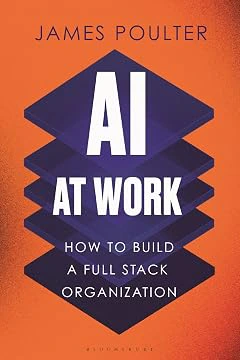
James has led innovation at enterprise scale and built AI-powered teams at start-up scale. His book, AI at Work: How to Build a Full Stack Organization, introduces the AI Nervous System, a framework that balances technological capability with human values, ethics, and culture. Organisations across multiple sectors have adopted it to move beyond experiments and build sustainable AI capability.
Audiences to James' talks leave with a clear view of how individual roles, team dynamics, and enterprise structures are changing, and how to redesign work for human and AI collaboration. They gain a method for deciding what to keep and what to delete, and a framework for governing AI use cases at scale.
Book James Poulter to give HR leaders, executives, and boards an ethical, practical route from AI experiments to enterprise-wide capability.
Topics, sessions and talks
AI is reshaping individual roles, team dynamics, and enterprise structures at the same time, yet most workforce plans address only one layer. Drawing on his book AI at Work and his experience building AI-powered teams, James Poulter maps the full stack of change: evolving skills and career paths, human and AI collaboration, new team models, and upskilling. HR leaders and executives leave with a framework for redesigning roles and preparing their workforce for an AI-first organisation.
Legacy processes and inherited mental models quietly hold organisations back. James Poulter shares a framework shaped by his experience at LEGO and Amazon Alexa: control what you can, listen to organisational signals, explore alternatives, think diagonally across functions, and delete what no longer serves you. Sections cover feedback loops, idea capture, innovation metrics, and strategic unlearning. Teams facing disruption leave with tools to overcome resistance to change and build a culture of continuous innovation.
Many organisations have run AI experiments without building lasting capability. James Poulter uses the human nervous system as a model for four connected systems: a better brain that captures organisational information, readiness to scale work with AI tools, a gut for ethical human and AI interaction, and hands and feet that govern use cases at scale. Leadership teams leave with a structure for moving from pilots to enterprise-wide AI capability.
Every organisation deploying AI faces ethical questions it cannot postpone. James Poulter guides audiences through the dilemmas that will define the next decade: environmental sustainability and carbon footprints, digital twinning, deepfakes and synthetic media, and the long-term societal legacy of AI decisions. Drawing on his work as an advocate for ethical AI implementation, he keeps the discussion practical. Audiences leave with tools for building ethical frameworks that protect the organisation while still enabling innovation.
Testimonials
Featured Projects

often considered together

Thomas Anglero
Artificial Intelligence
Leading with AI
Digital Transformation

Timothy Papandreou
Future Trends
Artificial Intelligence
Generative AI

Steve Brown
Leading with AI
Business Strategy
Generative AI

frequently asked questions
Something we've not covered here?
James Poulter builds each keynote around a named framework, such as the AI Nervous System or Ctrl Alt Del, and works through it with audience Q&A and interactive elements.
James Poulter specialises in the future of work, AI strategy, AI ethics, and innovation culture, covering topics from workforce redesign and the AI Nervous System framework to sustainability, digital twinning, and deepfakes. He is the founder of ThreePoint Labs and author of AI at Work, has delivered more than 250 keynotes, and previously founded and sold voice AI company Vixen Labs.
No. PepTalk adds no booking fee, so you pay the speaker's fee and nothing beyond it. The service, from shortlist through to contracts and event-day logistics, is included. For repeat or multi-event bookings, PepTalk can agree preferential rates with your procurement team.
Share your event date, audience, format, objectives and budget, and PepTalk sends a hand-picked shortlist within 24 hours. Each suggestion comes with a profile, a fee and a recommendation on the strongest fit. Once you choose, PepTalk handles contracts, travel and logistics through to event day.
The typical fee range is the speaker's standard in-person fee in their home market, shown in their local currency. It moves with format, location, date and session length: virtual sessions and shorter slots usually cost less, while international travel and peak dates cost more. Send your brief to PepTalk and the team will confirm the exact fee in your currency.
Not all of them, and it makes no difference to your booking. PepTalk's network of 15,000+ speakers covers talent the team works with directly alongside speakers represented by agents and agencies worldwide. PepTalk approaches the speaker, negotiates the fee and handles contracting either way.
Three to six months ahead is comfortable for most events, and 12 months is better for large conferences, peak-season dates or one specific in-demand speaker. Shorter timelines are workable, and PepTalk regularly fills last-minute and replacement bookings within days. Availability is the constraint, so get in touch as soon as you have a date.

