
Available to book
Navigate the complexities of emerging technologies and their impact on global economies with Olaf Groth, P.h.D, speaker, global futurist and strategist.

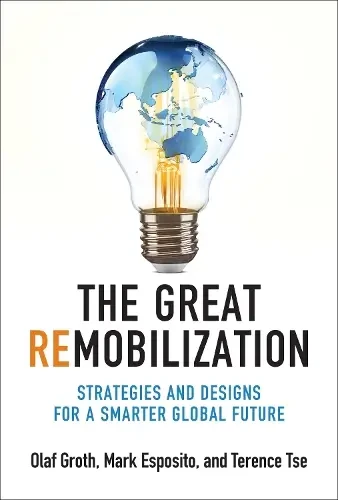
Olaf Groth, Ph.D. is a global futurist and strategist dedicated to helping leaders leverage the transformative potential of emerging technologies within the global economy. He has established himself as a key figure in the field with over thirty years of experience advising governments and multinational corporations such as Chevron, GE, and Volkswagen. As the founding CEO of Cambrian Futures and Cambrian Labs, Olaf leads a research think tank focusing on providing clarity in the tech economy. Olaf's work involves developing innovative tools, including privacy-inclusive data access agents, that address the complexities of modern data usage. In response to the rapid evolution of technologies like China’s DeepSeek, Olaf and his team create frameworks that assist companies in navigating digital and geopolitical changes while promoting responsible growth strategies. Olaf serves on the professional faculty at the UC Berkeley Haas School of Business, where he teaches strategy, policy, technology, and futures. His expertise encompasses critical areas such as artificial intelligence, cybersecurity, climate technology, and synthetic biology, equipping leaders to confront emerging risks effectively. Olaf is also the co-author of The Great Remobilization, alongside Mark Esposito, which presents a practical framework for capitalising on the unique opportunities and challenges presented by the "Six C's" – Cognitive Economy, CRISPR, Cybersecurity, Crypto, Climate, and China. This work integrates these elements into actionable business strategies, making his insights invaluable for those looking to thrive in an increasingly complex landscape. Through his extensive experience and thought leadership, Olaf continues to influence the future of business and technology globally.
Topics, sessions and talks
In his insightful talk, Olaf Groth explores the concept of GeoTech, emphasising the growing importance of geopolitics in technology. He argues that companies must now confront these issues, regardless of their previous stance. Groth provides leaders with essential questions regarding tech's impact on national security and global challenges like climate change and health. Attendees will learn to navigate the current landscape and develop strategies to transform threats into opportunities for sustainable growth.
In his talk, Olaf Groth, Ph.D. discusses Globalization 2.0 as the new framework for the cognitive economy, highlighting the six C’s of emerging risks: COVID, CRISPR, cognitive technology, crypto, cybersecurity, climate change, and China. Attendees will learn how to navigate these forces, integrate them into business strategies, and transform risks into opportunities, ensuring their organisations thrive in the evolving landscape of the Cognitive Era.
Olaf Groth, Ph.D. highlights the pervasive integration of AI across various sectors, including healthcare and finance. He discusses how governments and corporations leverage cognitive technology for enhanced control and power. In his talk, Groth explores the convergence of AI with quantum and climate technologies, equipping attendees with insights to identify opportunities and design a sustainable future pathway.
Featured Projects

often considered together
Jonathan Mildenhall
Diversity and Inclusion
Marketing

frequently asked questions
Something we've not covered here?
Olaf Groth structures his talks around proprietary frameworks developed through his research think tank, Cambrian Futures, most notably the Six C's model, which categorises converging global risks — cognitive technology, CRISPR, cybersecurity, crypto, climate change, and China — into an actionable strategic map. He applies this framework to help leaders translate geopolitical and technological complexity into concrete organisational strategies.
Olaf Groth speaks on the intersection of geopolitics and emerging technology, the six C's of risk in the cognitive economy, and the convergence of AI with business and society. He is a faculty member at UC Berkeley Haas School of Business and co-author of The Great Remobilization, with over thirty years of experience advising governments and multinational corporations including Chevron, GE, and Volkswagen.
No. PepTalk adds no booking fee, so you pay the speaker's fee and nothing beyond it. The service, from shortlist through to contracts and event-day logistics, is included. For repeat or multi-event bookings, PepTalk can agree preferential rates with your procurement team.
Share your event date, audience, format, objectives and budget, and PepTalk sends a hand-picked shortlist within 24 hours. Each suggestion comes with a profile, a fee and a recommendation on the strongest fit. Once you choose, PepTalk handles contracts, travel and logistics through to event day.
The typical fee range is the speaker's standard in-person fee in their home market, shown in their local currency. It moves with format, location, date and session length: virtual sessions and shorter slots usually cost less, while international travel and peak dates cost more. Send your brief to PepTalk and the team will confirm the exact fee in your currency.
Not all of them, and it makes no difference to your booking. PepTalk's network of 15,000+ speakers covers talent the team works with directly alongside speakers represented by agents and agencies worldwide. PepTalk approaches the speaker, negotiates the fee and handles contracting either way.
Three to six months ahead is comfortable for most events, and 12 months is better for large conferences, peak-season dates or one specific in-demand speaker. Shorter timelines are workable, and PepTalk regularly fills last-minute and replacement bookings within days. Availability is the constraint, so get in touch as soon as you have a date.

