
Available to book
Dr Syed S Shah
Dr Syed S Shah helps organisations tackle the silence that undermines decisions. A decision-making and psychological safety speaker, he developed the Defensive Decision Paradox drawing on doctoral research at the University of Bath.
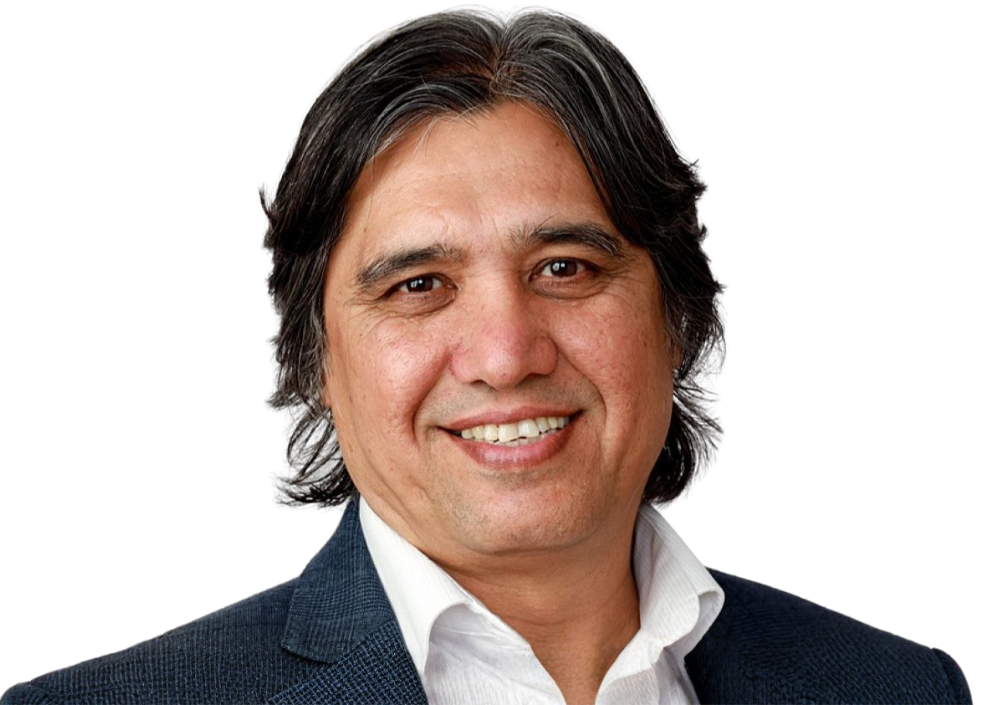
Dr Syed S Shah researches why capable professionals stay quiet at work, and what organisations can do about it.
His doctoral research at the University of Bath identified what he calls the Defensive Decision Paradox. When people can't read others' intentions they feel threatened, make defensive choices, and often produce the very outcome they were trying to avoid. Silence is the most common result. Syed is an expert trainer on Maven, where he teaches a live cohort course on making better decisions under social pressure, and founder of the education company Learning Brains.
He has delivered more than 150 workshops on speaking up, conflict management and psychological safety, each one doubling as a field study into what people don't say at work. His frameworks draw on security studies, psychology and behavioural science, and work on both sides of the problem: the culture leaders set and what individuals do in the room. Teaching live keeps his material under constant revision, and each cohort's questions feed straight back into his talks.
Audiences learn to separate the risk to the business from the risk to themselves, and to spot the Defensive Decision Paradox as it happens. They leave with language for naming it, practical moves for disagreeing well, and a clearer view of how urgency and social risk shape decisions.
Book Syed to help your people say the difficult thing at the moment it still makes a difference.
Topics, sessions and talks
Teams don't avoid conflict because they're conflict-averse by nature. They avoid it because nobody has shown them a version that ends well. Dr Syed S. Shah reframes disagreement as a trainable capability with observable moves: how to open, how to stay specific, how to disagree with a decision without appearing to attack the person who made it, and how to recover when it goes badly. Practical, immediately usable, and grounded in over 150 workshops on what people actually say and don't.
Most decision-making training assumes you're alone with the facts. At work, you're never alone. You're deciding in front of people whose judgement you can feel. This session separates the two risks that get confused in that moment, what's actually at stake for the business and what's at stake for you socially, and gives people a way to tell them apart in real time. Based on the live course Dr Syed teaches fortnightly on Maven, refined across dozens of cohorts.
Your most capable people can see the problem. They say nothing. Not because they don't care, and not because they lack confidence, but because the brain treats social risk as real risk and defends against it. Dr Syed S. Shah shows how that defence produces the exact outcome everyone was trying to avoid: the flawed plan nobody challenges, the feedback softened until it means nothing, the concern raised only after the damage is done. Audiences leave able to spot the paradox as it happens, and with language for naming it out loud.
Leaders reach for urgency because it works. It focuses people, it moves decisions, it cuts debate. Then it becomes the default, and the organisation quietly stops telling the truth. Drawing on doctoral research into how governments use threat to consolidate control, Dr Syed shows how the same mechanism operates in companies, and what it costs. For leadership teams who have noticed that bad news reaches them late, and want to understand why.
Organisations buy the platform, run the survey, restructure the team, then wonder why nothing changed. Dr Syed borrows a distinction from security studies: hardware is what you can purchase; software is legitimacy, trust and the capacity to act, and only the software determines whether anyone speaks. This session is for organisations on their second or third attempt at psychological safety, and explains why the individual and the culture have to be worked on together or neither holds.
Dr Syed S. Shah pairs doctoral research from the University of Bath with active practice: more than 150 workshops, live teaching on Maven, and a decade running Learning Brains. Organisations whose leaders hear bad news late, or whose staff soften feedback, get a speaker who has trained hundreds of professionals to manage difficulty conversations.
Testimonials

often considered together

Chloe Carmichael
Communication
Conflict Resolution
Stress Management
Dean Leak
Workplace Culture
High Performance
Team Building
Nikki Bhamra
Leadership Development
Workplace Culture
Behavioural Science

frequently asked questions
Something we've not covered here?
Dr Syed S Shah builds his sessions on examples gathered across more than 150 workshops and his live Maven cohorts, breaking skills such as disagreement into observable moves: how to open, how to stay specific and how to recover when it goes badly.
Dr Syed S Shah specialises in disagreeing well, decision-making under social pressure, the Defensive Decision Paradox, the cost of permanent urgency, and why psychological safety initiatives don't stick. His doctoral research at the University of Bath underpins the Defensive Decision Paradox, which he has tested across more than 150 workshops and a live cohort course he teaches on Maven.
No, PepTalk doesn't charge a booking fee. You pay the speaker's fee plus any travel and expenses, which PepTalk confirms upfront in your quote. The shortlist, contracting and event-day logistics are included. For repeat or multi-event bookings, PepTalk can agree preferential rates with your procurement team.
PepTalk sends a shortlist of matched speakers within 24 hours, each with a profile, a fee and a recommendation on the strongest fit. The more you share about your date, audience, format, objectives and budget, the closer the match. Once you choose, PepTalk handles the contract, travel and logistics through to event day.
The typical fee range on a PepTalk speaker profile is a guide to what that speaker usually costs for an in-person event in their home market, shown in their local currency. The final fee depends on format, location, date and session length. Virtual and shorter sessions usually cost less, and international travel and peak dates cost more. PepTalk confirms the exact fee in your currency once it has your brief.
No. PepTalk represents 15,000+ speakers, hosts, comedians and entertainers, some booked directly and others through their agents and agencies worldwide. The process is the same for all of them: PepTalk checks availability, negotiates the fee and manages the contract and logistics.
Tge PepTalk team suggests you book a speaker three to six months before your event. Allow 12 months for large conferences, peak-season dates or a specific in-demand name. PepTalk also fills last-minute and replacement bookings, often within days, so get in touch as soon as you have a date, even at short notice.

