
Available to book
Nicholas Epley
Nicholas Epley, behavioural scientist and professor at the University of Chicago Booth School of Business and author of Mindwise, specialises in social cognition and decision‑making; I recommend him for his research translating how people infer others' thoughts, beliefs and intentions into practical guidance for communication and judgement.

Nicholas Epley is a behavioural scientist and professor at the University of Chicago Booth School of Business. His work delves into the intricacies of social cognition, focusing on how we comprehend the thoughts, beliefs, and intentions of others. As an expert in human behaviour and decision-making, Nicholas offers valuable insights into improving interpersonal understanding, making his talks both enlightening and impactful. Nicholas's research is pivotal in the field of social cognition, where he explores the mechanisms behind human judgment and perception. His book, "Mindwise: How We Understand What Others Think, Believe, Feel, and Want," is a testament to his expertise, providing readers with a deeper understanding of how we interpret the mental states of those around us. Through his work, Nicholas challenges common assumptions and encourages a more nuanced approach to understanding human interactions. Throughout his career, Nicholas has faced the challenge of bridging the gap between complex scientific concepts and practical applications. His ability to translate intricate research findings into accessible knowledge has made him a sought-after speaker and educator. His dedication to enhancing interpersonal understanding is evident in his engaging presentations, where he shares strategies for improving communication and empathy in both personal and professional settings. Nicholas's contributions to the field have been recognised through various accolades and his position at a prestigious institution like the University of Chicago. His academic background and extensive research experience lend credibility to his insights, making him a trusted voice in the realm of behavioural science. By attending his talks, audiences gain a deeper appreciation for the complexities of human thought and the importance of fostering better connections with others.
Topics, sessions and talks
Nicholas Epley, a mind reader with an extraordinary ability to understand others' thoughts and feelings, presents a high-energy, illuminating talk exploring the mysteries of the human mind. He challenges the audience to consider how well they truly know their coworkers, employees, competitors, and customers. Epley delves into why we often misjudge others' thoughts and feelings, why we sometimes anthropomorphize objects, and why we believe we understand others better than we do. Attendees will learn to revolutionize their perceptions of others and themselves, gaining insights into the complexities of human interaction.
Ethical organizations are sustainable organizations. Doing good leads to doing well in the long run, while also producing happier and more motivated employees in the short run. The problem, argues Nicholas Epley, is that there are four common myths about morality that lead to misunderstandings about how to create more ethical organizations. Instead of treating ethics as a problem about people’s beliefs, we should treat it as an issue about the systems in which people live and work. Epley explains how businesses, and individuals, can design their policies and structures to ensure they are both doing good and feeling good. This approach offers constructive, concrete ideas for designing ethical systems that keep all of us engaged, effective, and happier.
In his talk, Nicholas Epley, a professor at the University of Chicago, delves into the science of misinterpreting others. Drawing from his book, Mindwise, he explores the complexities of human interaction and our interpretive blind spots, shedding light on our innate yet flawed capacity to understand intentions and feelings.
Understanding why people buy what they buy, think what they think, and act as they do requires understanding how those people evaluate the world through their own eyes and from their own inside perspective. One reason companies misunderstand their consumers, leaders misunderstand their followers, and managers misunderstand their clients is because they inherently evaluate other people from an outside perspective. In this presentation, Epley addresses what behavioral scientists have learned about these two differing perspectives, describes how they create systematic misunderstanding between people, and shares with audiences how you can align your perspective with others to understand them better in both your professional as well as personal life.
Featured Projects
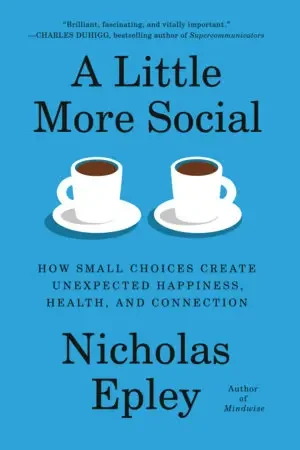
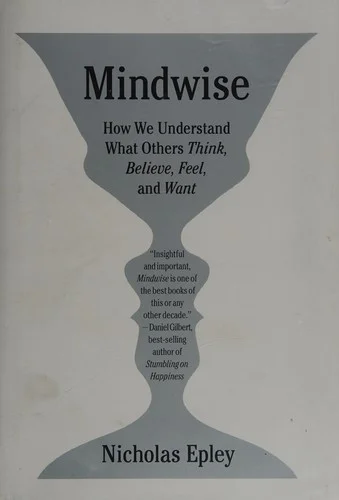

often considered together

Katy Milkman
Decision Making
Behavioural Science
Strategic Decision Making

frequently asked questions
Something we've not covered here?
Nicholas Epley draws on findings from his academic research in behavioural science, including material from his book Mindwise, to examine the mechanisms behind how people misread others' thoughts, intentions, and feelings.
Nicholas Epley speaks on misreading others' intentions and feelings, the science of social cognition, and designing ethical organisational systems. He is a professor at the University of Chicago Booth School of Business and author of Mindwise: How We Understand What Others Think, Believe, Feel, and Want.
No. PepTalk adds no booking fee, so you pay the speaker's fee and nothing beyond it. The service, from shortlist through to contracts and event-day logistics, is included. For repeat or multi-event bookings, PepTalk can agree preferential rates with your procurement team.
Share your event date, audience, format, objectives and budget, and PepTalk sends a hand-picked shortlist within 24 hours. Each suggestion comes with a profile, a fee and a recommendation on the strongest fit. Once you choose, PepTalk handles contracts, travel and logistics through to event day.
The typical fee range is the speaker's standard in-person fee in their home market, shown in their local currency. It moves with format, location, date and session length: virtual sessions and shorter slots usually cost less, while international travel and peak dates cost more. Send your brief to PepTalk and the team will confirm the exact fee in your currency.
Not all of them, and it makes no difference to your booking. PepTalk's network of 15,000+ speakers covers talent the team works with directly alongside speakers represented by agents and agencies worldwide. PepTalk approaches the speaker, negotiates the fee and handles contracting either way.
Three to six months ahead is comfortable for most events, and 12 months is better for large conferences, peak-season dates or one specific in-demand speaker. Shorter timelines are workable, and PepTalk regularly fills last-minute and replacement bookings within days. Availability is the constraint, so get in touch as soon as you have a date.

