6 Warning Signs A Gen Z Employee is About to Quit
Alex Atherton shares the 6 warning signs a Gen Z employee may quit: quiet in meetings, LinkedIn updates, lost enthusiasm, act early to retain talent.


H2 link
Tell us about your event and we'll match you with the right person for your audience.
Trusted by 3k+ event planners
Recommended experts



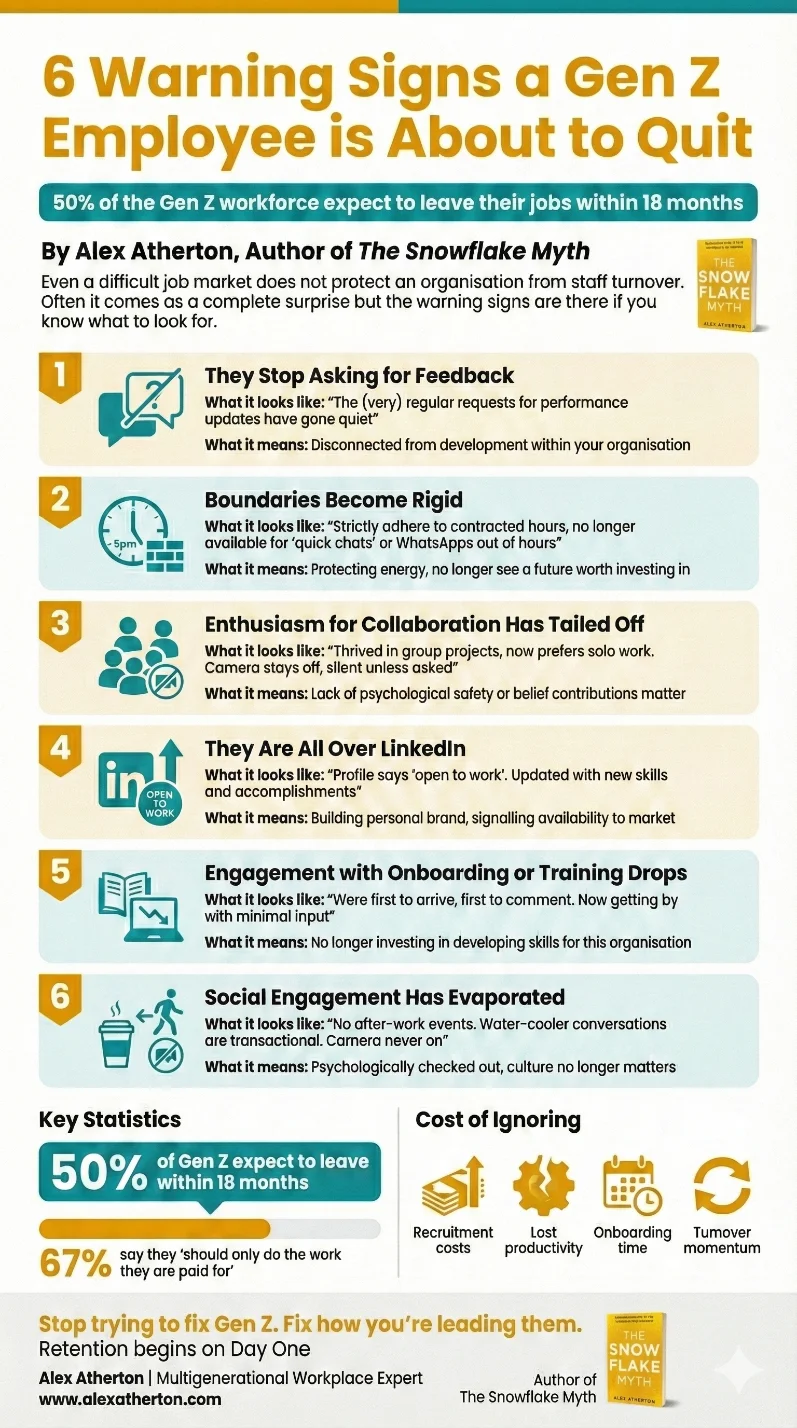
Even a difficult job market does not protect an organisation from Gen Z employee turnover. Recent workforce research suggests a large share of Gen Z employees expect to move on from their jobs within a couple of years. Often it comes as a complete surprise, but the warning signs are there if you know what to look for.
The Warning Signs for Gen Z employers
1. They stop asking for feedback
What it looks like: The (very) regular requests for performance updates and all the feedback you can offer have gone quiet.
What it means: This may not be maturity or newfound confidence. When Gen Z stops seeking feedback, they've disconnected from their development within your organisation. Their focus may have shifted elsewhere: a side hustle, a job search, or simply switching off. Silence signals disengagement.
What to do: Don't wait for them to ask. Schedule a one-to-one immediately and have the conversation. Be prepared to dig a little and say what you have noticed. Be ready with specific, detailed feedback on recent work and clear resources to help them develop.
2. Boundaries become rigid
What it looks like: Previously flexible employees now strictly adhere to contracted hours. They're no longer available for ‘quick chats’ or WhatsApps out of hours
What it means: The risk is that it represents a significant withdrawal. They're protecting their energy because they no longer see a future worth investing in. Many Gen Z employees who say they 'should only do the work they are paid for' aren't being entitled, they're being rational about where they invest discretionary effort. For whatever reason they’ve decided it is no longer worth it.
What to do: This requires honest conversation about their long-term prospects within the organisation. Don't lecture about ‘going above and beyond’. If your personal work history ever was relevant it’s not now. Instead, discuss their career aspirations and map out a tangible path forward with specific milestones and timeline. In short, aim to bottom out the engagement, and remember that leaders who skip the empathetic follow-through tend to lose their best people, not just their most vocal ones.
3. Enthusiasm for collaboration has tailed off
What it looks like: A team member who previously thrived in group projects now prefers solo work. They contribute minimally in team meetings. Their camera stays off during video calls, and they're silent unless directly asked.
What it means: Gen Z is the most naturally collaborative generation in the workplace—their formative years have been spent building and rebuilding digital communities. Withdrawal might come from a lack of psychological safety or a belief their contributions still matter.
What to do: Talk it through and be ready with some structured opportunities for meaningful contribution. Also have strong recent examples for ‘you said, we did’. Gen Z needs to see that their collaboration produces tangible change.
4. They are all over LinkedIn
What it looks like: Their profile picture suddenly says ‘open to work’. Their activity has picked up, not least with potential new employers or people ‘looking to invest’. The time they might have spent on their projects for you has gone on updating their profile with the new skills and accomplishments you facilitated.
What it means: This is the digital equivalent of dusting off their CV in public. They're building their personal brand and signalling availability to the market. Given that so many Gen Z are already running their own businesses they may not just be looking for another job. They could be evaluating all their options, including business partners or funding.
What to do: Adding ‘open to work’ is so blatant it’s almost negligence not to spot it. Someone should see it somewhere. Ignoring this signal just ‘proves’ you don’t care. They have made them public so have a conversation and keep it curious. Ask directly about their professional goals and what would need to change for them to see a long-term future with you. This requires vulnerability from leadership—you might not like the answers, but you need to hear them.
5. Engagement with onboarding or training drops
What it looks like: They were first to arrive, to leave a comment or to dig in on the new e-learning course. Now they are getting by with minimal input.
What it means: They're no longer investing in developing skills for this organisation. They might feel you have ‘taken them as far as they can go’. They might see that the only way ahead is an admin-laden ‘high stress, low reward’ middle management job. You might have everything laid out for them beautifully, but that may still not be more attractive than an alternative career trajectory.
What to do: Revisit your approach to personal and professional development. Are you offering training that genuinely matters to them? After a certain point is it middle management or bust because ‘we have covered everything now’. How strong is your offer for those who just want to get better but not go any higher?
6. Social engagement has evaporated
What it looks like: They no longer attend after-work events. Water-cooler conversations are transactional. The camera is never on for the call. Quiet quitting their way down to contracting hours and not a minute more.
What it means: Psychologically they have checked out, and the organisational culture no longer matters to them. This is particularly telling because of how Gen Z values collaboration. When they withdraw socially, they've fundamentally disconnected from the team.
What to do: Tempting though it might be to mandate social attendance, don’t do it. Do examine why they've withdrawn. It might be similar to the type of conversation referenced above but it might also be a little different. Are social events genuinely inclusive across generations? Do they create opportunities for authentic connection or are they performative obligations? Did one person unilaterally decide what would be fun for everyone? Sometimes the issue isn't the individual, it's that your offering is not in the right place.
What is the cost of ignoring the signs?
Recruitment costs dwarf retention costs, and on top of that there are selection processes, onboarding and the productivity lag while new employees get up to speed.
And when one Gen Z employee leaves, others start questioning their own futures. Staff turnover can create its own momentum as staff who hadn't considered their options begin actively looking when they see peers moving on. A little turnover can become an exodus if you do not act, especially in a business built across five generations of employees with very different expectations of work.
Retention begins on Day One
The battle for Gen Z retention doesn't start when you spot warning signs, it starts at the job offer. The connection established during the selection process needs to be maintained if you want them to turn up — see our guide on how to engage graduates and early career employees for more on getting this right from day one.
And when they do they need to find the company culture and their role exactly as described during recruitment. Any gap between promise and reality accelerates every warning sign on this list.
Understanding Gen Z characteristics is crucial for effective retention strategies. The organisations that successfully retain this workforce aren't those with the highest salaries or flashiest perks. They're the ones demonstrating authenticity, providing ultra-clear communication, offering genuine development opportunities and treating their youngest employees as valuable contributors rather than problems to be fixed.
Ultimately this is a leadership question. Organisations who stop trying to fix Gen Z and focus on how they are leading them will be the ones who prosper.
» READ MORE: Brilliant generational speakers for your company event
💡 Would you like to explore this topic with Alex Atherton? Send us a message and we'll set up a free strategy call. Remember, it’s always a good time to get a PepTalk!
Alex Atherton
Read more from Alex Atherton
Alex Atherton speaks about transforming Gen Z recruitment & retention and helping organisations turn multigenerational diversity into an asset. He is the author of "The Snowflake Myth: Explaining Gen Z in the workplace and beyond" and works with organisations on multigenerational workplace dynamics.
Tell us about your event and we'll match you with the right person for your audience.
Trusted by 5k+ event planners
Similar Articles







Tell us about your event. We'll find the right voice.
Get expert recommendations matched to your brief, your audience, and your budget.