.svg)
November 27, 2025
.svg)
4 minutes
Eat This, Think Better: A Leader's Guide to Nutrition
Health coach and speaker, Vanessa Sturman, shares practical ways to help leaders and teams think more clearly, feel more energised

.svg)
.svg)


Health coach and speaker, Vanessa Sturman, shares practical ways to help leaders and teams think more clearly, feel more energised
Food affects our energy, performance, long-term health and even sick days. Food can affect blood flow to the brain and muscles, which shapes how we think, concentrate, and handle pressure. Even adding simple ingredients each day, including on the go, can influence cognitive performance. Yet in many workplaces, nutrition is still treated as a personal matter rather than a performance strategy or a key tool for future-proofing the organisation.
Poor staff health costs UK businesses over £100 billion every year in lost productivity. Absenteeism and low energy reduce output, but they also affect the foundation of an organisation’s success: leadership decisions, creativity, and collaboration. When people are well-nourished, cognitive function improves, stress is better managed, and performance becomes more sustainable across the organisation.
Leadership requires focus, and breakfast can certainly help with performance. Including something in the morning that contains protein, complex carbohydrates and fibre helps stabilise blood sugar and can support mental clarity. It doesn’t have to be when you wake up. Even eating at 10am at your desk, for example, is fine.
For speed, I often recommend a simple mix of oats, soy milk, chia seeds, and berries, finished with a handful of nuts or seeds. Add a scoop of protein powder for extra protein. It’s quick, realistic, and easy to take to work in a tupperware or thermos — exactly the kind of habit that fits a busy schedule.
Carbs and convenience foods are often unfairly blamed for poor performance, but the key is how they’re combined, balanced and the type you choose. Whether you make lunch at home or order it in, small adjustments can turn your lunch into a real asset for focus and sustained energy.
A few ideas:
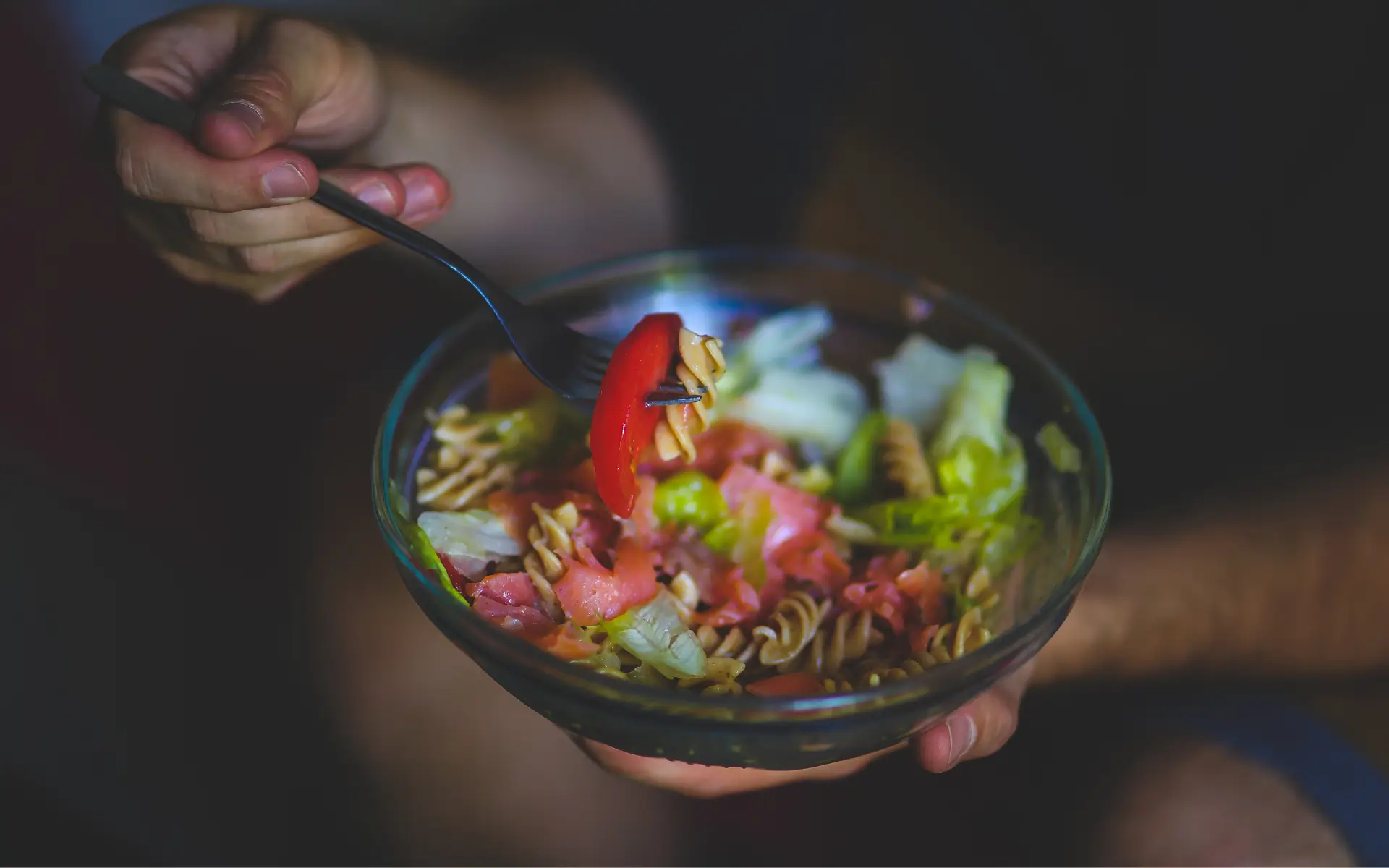
For those relying on deliveries or canteen lunches, options like poke bowls, salad boxes with beans or grains or lentil curries can offer balance without effort. These provide slow-release carbohydrates, protein, and antioxidants.
The goal isn’t to restrict but to make practical swaps that help you stay full, alert, and productive.
Even slight dehydration can cause fatigue, headaches, and reduced attention — all of which affect workplace performance. Since the brain is about 75% water, maintaining hydration is important for clear thinking and decision-making under pressure.
Keep a refillable bottle nearby as a cue to drink regularly, and remember that hydration also comes from food. Fruit and vegetables are high water content food and have essential micronutrients that help support energy and concentration.
That’s fibre! This is what your good gut bacteria eat. It helps reduce the risk of disease, reduces inflammation, and affects your performance and overall health. It also has a big role in regulating appetite and making us feel more satiated, which can indirectly support our ability to focus. We need a variety of fibre for optimal health, so including a broad mix of fruits, vegetables, wholegrains, beans, lentils, nuts, and seeds gives the body the nutrients it needs for long-term focus and resilience.
To start adding more in, keep it simple:
• Add beans or lentils to soups, salads, or wraps
• Roast vegetables in advance to mix into meals
• Keep roasted chickpeas or roasted edamame beans close by for a high-protein snack (these can just be bought online)
A handful of nuts and seeds each day is an easy, low-effort way to support cognitive function and long-term health. They’re rich in essential fats, vitamins, and minerals that contribute to cognitive performance.
I spoke on a panel for Whitworths alongside prominent food policy campaigner, Henry Dimbleby, and experts from the British Nutrition Foundation and The Grocer, where the discussion focused on small, practical actions with a big cumulative effect. This daily habit of a handful of nuts and seeds a day is one of them. It’s straightforward, sustainable, and highly effective. You can even keep an airtight Tupperware of mixed nuts in your office locker.
A common belief is “I can’t control any of my food because I travel”. Travel won’t stop, and it doesn’t have to be an all-or-nothing approach. With a few small strategies, it’s possible to stay nourished and focused even on the move.
Keep portable snacks such as nuts, roasted chickpeas, or fruit for flights or long train journeys. When eating out, add side salads or extra vegetables to restaurant meals, and choose options that include beans and lentils for more fibre and plant protein. At hotel breakfasts, add oats, fruit, or wholegrain toast with nut butter to whatever else you’re eating.
These small choices make a real difference to how energised and alert you feel during periods with lots of travel.
Improving nutrition doesn’t have to mean overhauling the entire way we eat, or completely cutting out less healthy foods. The most powerful results come from small, consistent habits that fit naturally into daily routines, cultural cuisines, and your dietary preferences.
When leaders and teams eat to support their energy and focus, they make clearer decisions, handle stress more effectively, and bring more creativity and resilience to their roles. Investing in nutrition education is, ultimately, an investment in leadership performance.

Vanessa Sturman delivers practical, evidence-based keynotes and workshops that help leaders and teams build sustainable energy, sharper focus, and resilience that lasts beyond January. Her sessions are grounded in science, realistic for busy workdays, and designed to drive measurable performance benefits. Learn more and book Vanessa Sturman as a speaker. Whether you are planning a leadership offsite, wellbeing programme, or company-wide event, Vanessa equips audiences with habits they can use immediately and confidently. To book, email us at hello@getapeptalk.com or send us a message via the chat. You can also call us on +44 20 3835 2929 (UK) or +1 737 888 5112 (US). Remember, it’s always a good time to get a PepTalk!